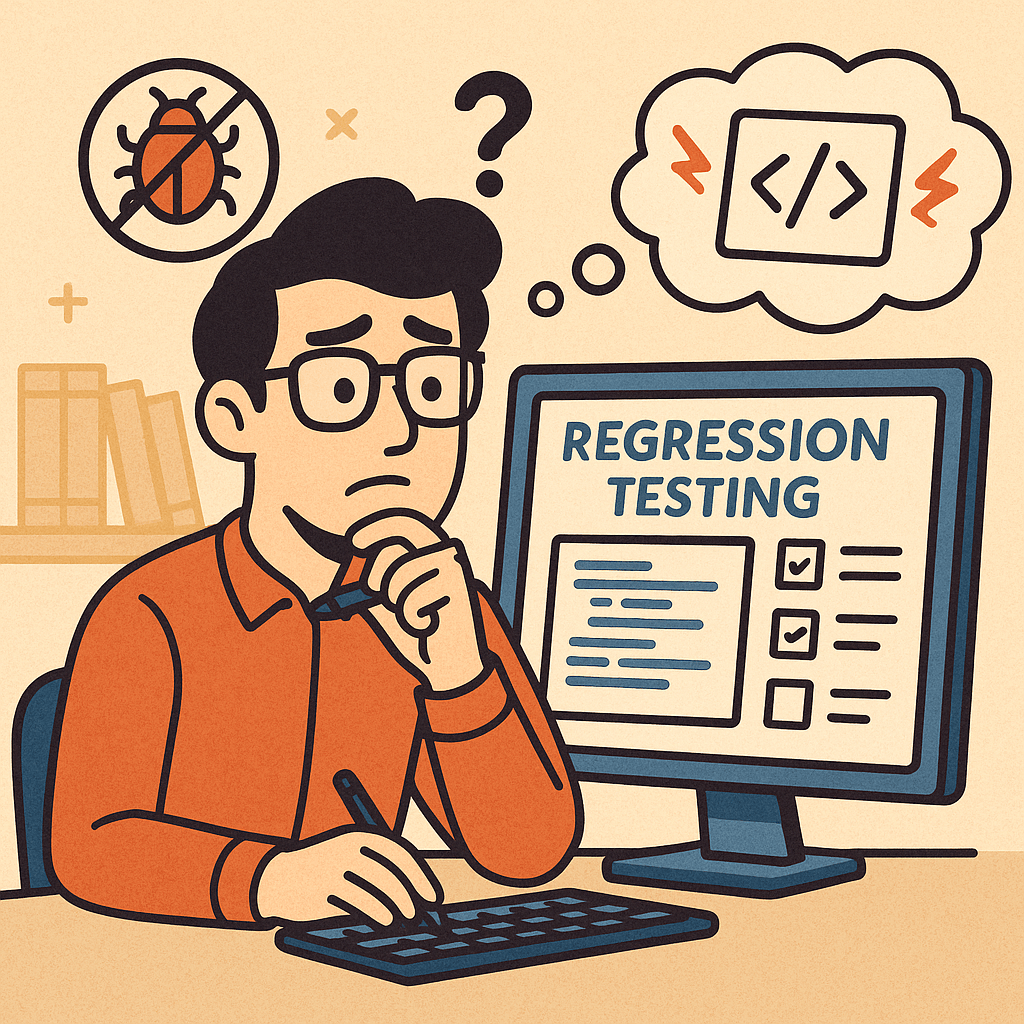
What is Regression Testing?
Regression testing is a type of software testing that ensures recent code changes, bug fixes, or new features do not negatively impact the existing functionality of an application. In simple terms, it verifies that what worked before still works now, even after updates.
This type of testing is crucial because software evolves continuously, and even small code changes can unintentionally break previously working features.
Main Features and Components of Regression Testing
- Test Re-execution
- Previously executed test cases are run again after changes are made.
- Automated Test Suites
- Automation is often used to save time and effort when repeating test cases.
- Selective Testing
- Not all test cases are rerun; only those that could be affected by recent changes.
- Defect Tracking
- Ensures that previously fixed bugs don’t reappear in later builds.
- Coverage Analysis
- Focuses on areas where changes are most likely to cause side effects.
How Regression Testing Works
- Identify Changes
Developers or QA teams determine which parts of the system were modified (new features, bug fixes, refactoring, etc.). - Select Test Cases
Relevant test cases from the test repository are chosen. This selection may include:- Critical functional tests
- High-risk module tests
- Frequently used features
- Execute Tests
Test cases are rerun manually or through automation tools (like Selenium, JUnit, TestNG, Cypress). - Compare Results
The new test results are compared with the expected results to detect failures. - Report and Fix Issues
If issues are found, developers fix them, and regression testing is repeated until stability is confirmed.
Benefits of Regression Testing
- Ensures Software Stability
Protects against accidental side effects when new code is added. - Improves Product Quality
Guarantees existing features continue working as expected. - Boosts Customer Confidence
Users get consistent and reliable performance. - Supports Continuous Development
Essential for Agile and DevOps environments where changes are frequent. - Reduces Risk of Production Failures
Early detection of reappearing bugs lowers the chance of system outages.
When and How Should We Use Regression Testing?
- After Bug Fixes
Ensures the fix does not cause problems in unrelated features. - After Feature Enhancements
New functionalities can sometimes disrupt existing flows. - After Code Refactoring or Optimization
Even performance improvements can alter system behavior. - In Continuous Integration (CI) Pipelines
Automated regression testing should be a standard step in CI/CD workflows.
Real World Use Cases of Regression Testing
- E-commerce Websites
- Adding a new payment gateway may unintentionally break existing checkout flows.
- Regression tests ensure the cart, discount codes, and order confirmations still work.
- Banking Applications
- A bug fix in the fund transfer module could affect balance calculations or account statements.
- Regression testing confirms financial transactions remain accurate.
- Mobile Applications
- Adding a new push notification feature might impact login or navigation features.
- Regression testing validates that old features continue working smoothly.
- Healthcare Systems
- When updating electronic health record (EHR) software, regression tests confirm patient history retrieval still works correctly.
How to Integrate Regression Testing Into Your Software Development Process
- Maintain a Test Repository
Keep all test cases in a structured and reusable format. - Automate Regression Testing
Use automation tools like Selenium, Cypress, or JUnit to reduce manual effort. - Integrate with CI/CD Pipelines
Trigger regression tests automatically with each code push. - Prioritize Test Cases
Focus on critical features first to optimize test execution time. - Schedule Regular Regression Cycles
Combine full regression tests with partial (smoke/sanity) regression tests for efficiency. - Monitor and Update Test Suites
As your application evolves, continuously update regression test cases to match new requirements.
Conclusion
Regression testing is not just a safety measure—it’s a vital process that ensures stability, reliability, and confidence in your software. By carefully selecting, automating, and integrating regression tests into your development pipeline, you can minimize risks, reduce costs, and maintain product quality, even in fast-moving Agile and DevOps environments.

 Software Engineer's Notes
Recent Comments