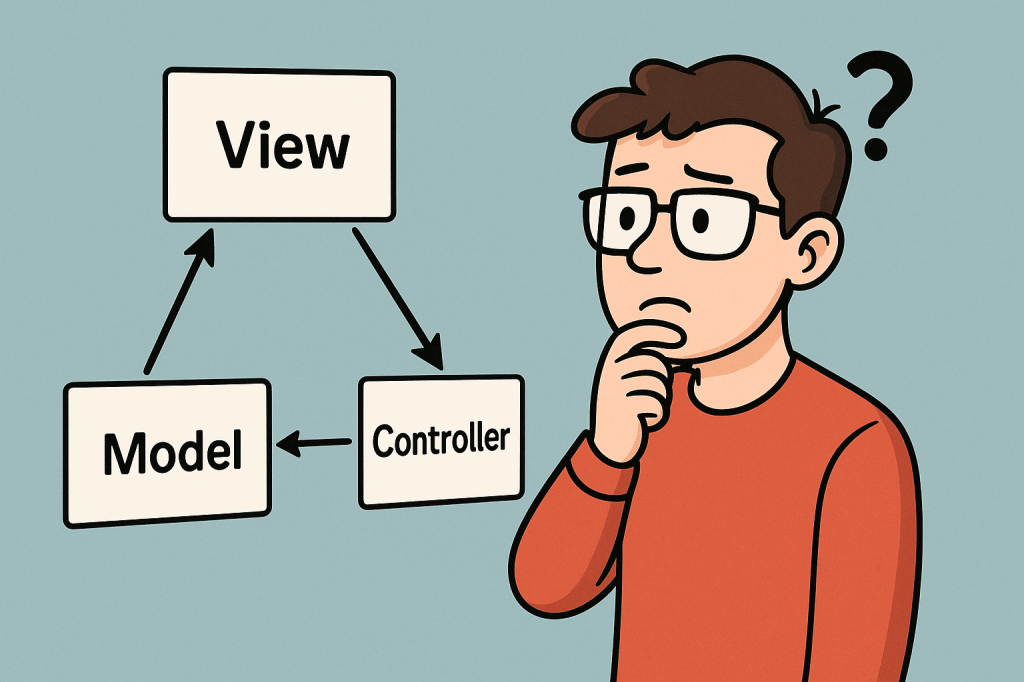
What is an MVC Framework?
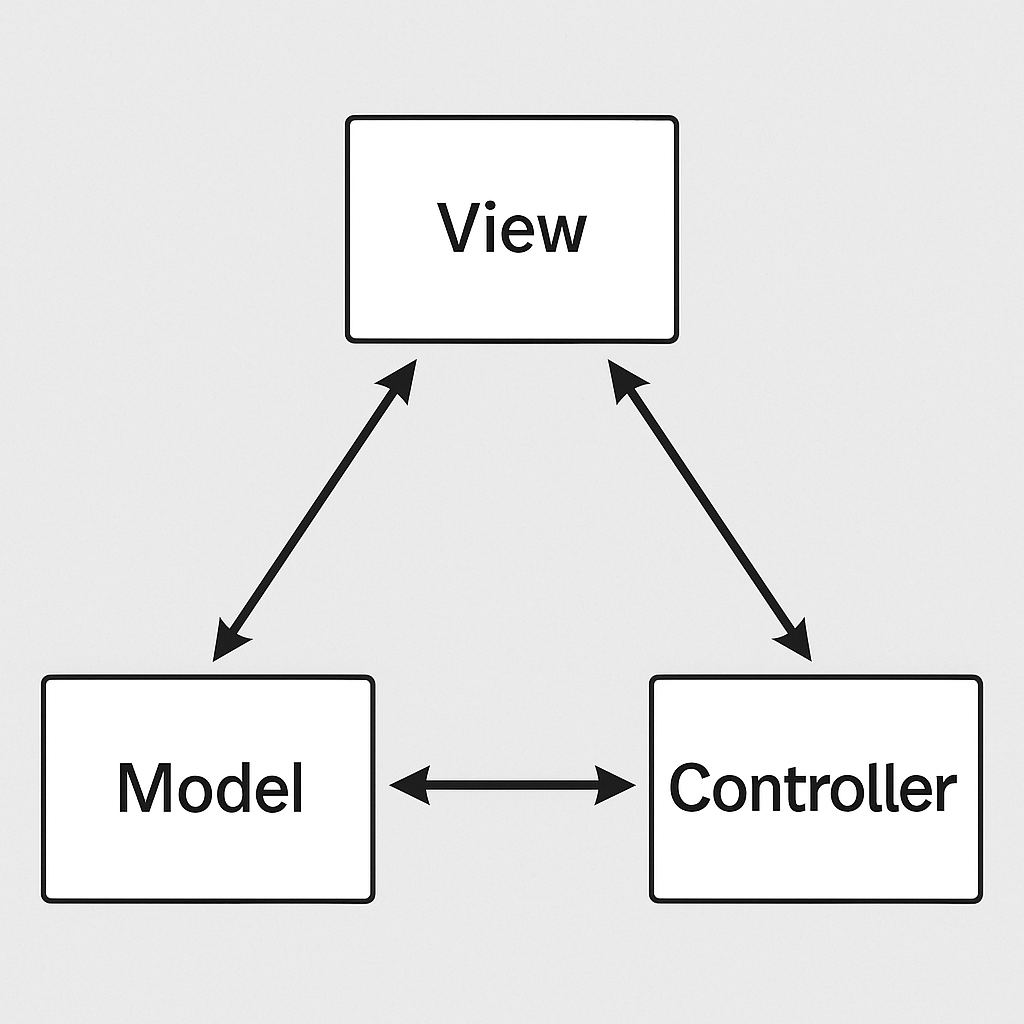
MVC stands for Model–View–Controller, a popular architectural pattern used in software engineering. An MVC framework provides a structured way to separate concerns in an application, making development, testing, and maintenance more manageable. Instead of mixing data, logic, and presentation in one place, MVC enforces a separation that leads to cleaner and more scalable applications.
A Brief History of MVC
The concept of MVC was introduced in the late 1970s by Trygve Reenskaug while working on Smalltalk at Xerox PARC. It was designed as a way to build graphical user interfaces (GUIs) where data and display could be managed independently. Over the years, MVC gained traction in desktop applications and later became one of the dominant architectural patterns for web development frameworks like Ruby on Rails, Django, Angular (early versions), and ASP.NET MVC.
Principles and Components of MVC
The MVC pattern is based on the principle of separation of concerns, ensuring that each part of the application has a distinct role. It consists of three main components:
1. Model
- Represents the data and the business logic of the application.
- It is responsible for retrieving, storing, and updating information (often interacting with a database).
- Example: In a blog system, the
Postmodel defines the structure of a blog post and manages operations like saving or fetching posts.
2. View
- Handles the presentation layer.
- Responsible for displaying the data from the model in a user-friendly way (HTML, JSON, templates, etc.).
- Example: A web page showing a list of blog posts retrieved by the model.
3. Controller
- Acts as the middle layer between the Model and View.
- Receives input from the user, processes it, communicates with the model, and selects the appropriate view for the response.
- Example: When a user clicks “Create Post,” the controller processes the request, updates the model, and sends the user to a confirmation view.
Advantages of MVC Frameworks
- Separation of concerns: Each component handles a specific responsibility, reducing code complexity.
- Maintainability: Easier to update or modify individual parts without affecting the entire system.
- Testability: Each component can be tested independently, leading to more reliable applications.
- Reusability: Models, views, or controllers can be reused across different parts of the application.
- Collaboration: Teams can work on different parts (UI, backend, logic) simultaneously without conflicts.
Benefits for Today’s Software Development
In today’s world of fast-paced, large-scale software development, MVC frameworks provide a foundation for:
- Scalability: Applications can grow in features and users while remaining stable.
- Agility: Easier to adopt Agile and DevOps practices, since MVC frameworks often integrate well with CI/CD pipelines.
- Cross-platform use: MVC works for both web and mobile applications, making it versatile.
- Community and support: Many popular frameworks (Spring MVC, Laravel, Rails, Django) are built on MVC principles, offering strong ecosystems and libraries.
Why Do People Prefer to Use MVC?
- Familiarity: MVC is widely taught and used, so developers are comfortable with it.
- Productivity: Built-in structures and conventions reduce the need to “reinvent the wheel.”
- Efficiency: Development is faster because teams can work in parallel on models, views, and controllers.
- Integration: Works well with modern tools, cloud services, and databases.
How to Integrate MVC into Your Software Development Process
- Choose a framework: Pick one suited to your programming language (e.g., Spring MVC for Java, Laravel for PHP, Django for Python).
- Define models: Identify your application’s data structures and business rules.
- Design views: Create templates or interfaces to present data clearly to users.
- Implement controllers: Connect user actions to business logic and select views for responses.
- Test each layer: Write unit tests for models, functional tests for controllers, and UI tests for views.
- Iterate and refine: Continuously improve your architecture as your project grows.

 Software Engineer's Notes
Recent Comments