Search

Software Engineer's Notes

Tag

Extreme Programming

Pair Programming: Working Together for Better Code

Pair programming

What is Pair Programming?

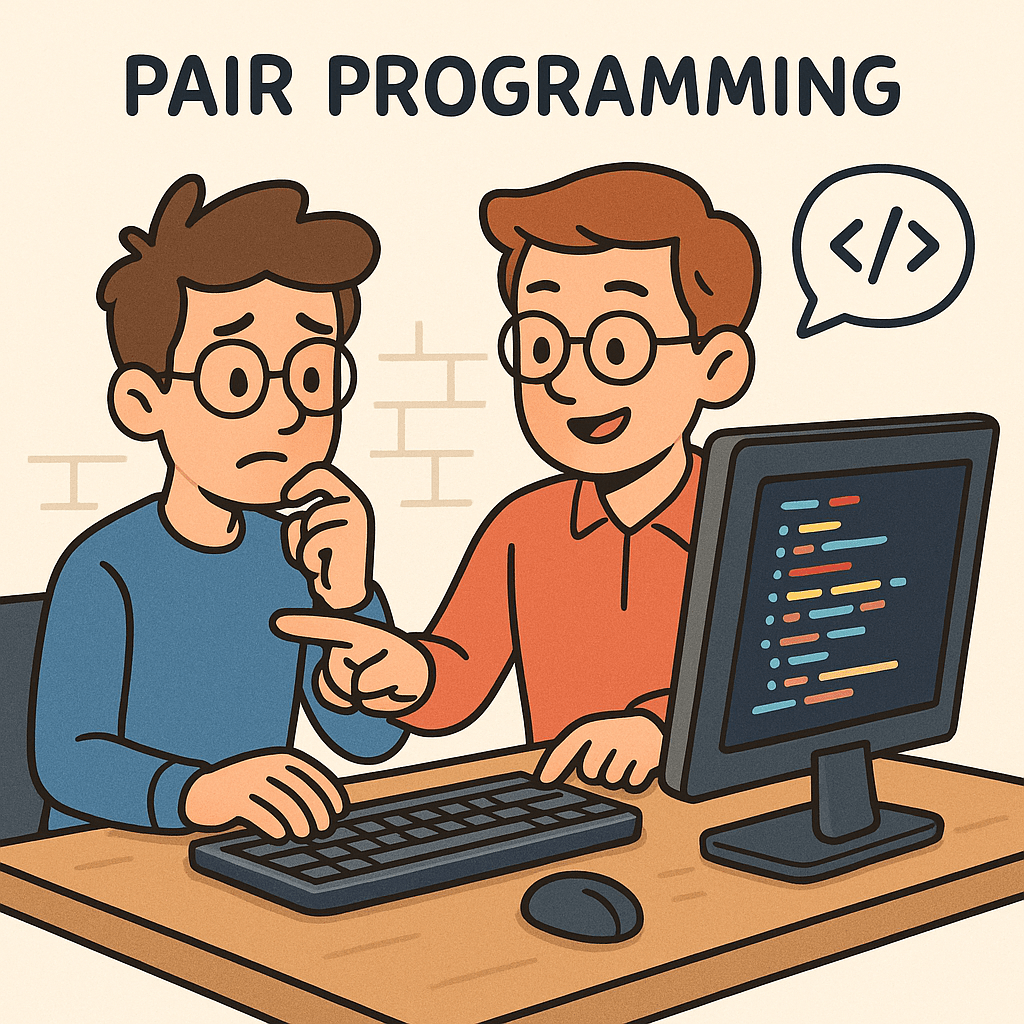
Pair programming is a software development technique where two programmers work together at one workstation. One developer, called the Driver, writes the code, while the other, the Observer or Navigator, reviews each line of code as it is typed. They frequently switch roles, ensuring both remain engaged and focused.

Why Do We Need Pair Programming?

Software development is complex, and mistakes are easy to make when working alone. Pair programming helps reduce errors, improves code quality, and encourages knowledge sharing between team members. It also fosters collaboration, which is essential in agile teams.

A Brief History of Pair Programming

Pair programming became popular in the late 1990s with the rise of Extreme Programming (XP), an agile software development methodology introduced by Kent Beck. XP emphasized practices that increased communication, feedback, and simplicity—pair programming being one of the core practices. Over time, this approach has been adopted in many agile teams worldwide.

Benefits of Pair Programming

  • Higher Code Quality: Continuous code review reduces bugs and improves design.
  • Faster Knowledge Transfer: Developers learn from each other in real time.
  • Improved Team Communication: Encourages collaboration and trust.
  • Problem Solving: Two minds tackling a problem often find better solutions.
  • Reduced Knowledge Silos: Knowledge of the codebase is spread across the team.

Advantages of Pair Programming

  • Fewer bugs and higher quality code.
  • Enhanced learning opportunities for junior developers.
  • Improved team dynamics and collaboration.
  • Helps maintain coding standards consistently.

Disadvantages of Pair Programming

  • Increased Costs: Two developers working on one task may seem less efficient.
  • Personality Conflicts: Not all developers enjoy working closely with others.
  • Fatigue: Pairing requires constant focus, which can be tiring over time.
  • Not Always Necessary: For simple or repetitive tasks, solo programming might be faster.

Should We Use Pair Programming in Our Projects?

The decision depends on the project and team culture. Pair programming works best when:

  • The project is complex and requires careful design.
  • You have new team members who need to learn quickly.
  • Code quality is critical (e.g., healthcare, finance, security applications).
  • Collaboration and team bonding are important goals.

However, it might not be ideal for short, simple tasks or when deadlines are extremely tight. A hybrid approach, where pair programming is used strategically for complex or high-risk parts of a project, often delivers the best results.
Extreme Programming (XP): A Complete Guide

What is Extreme Programming?

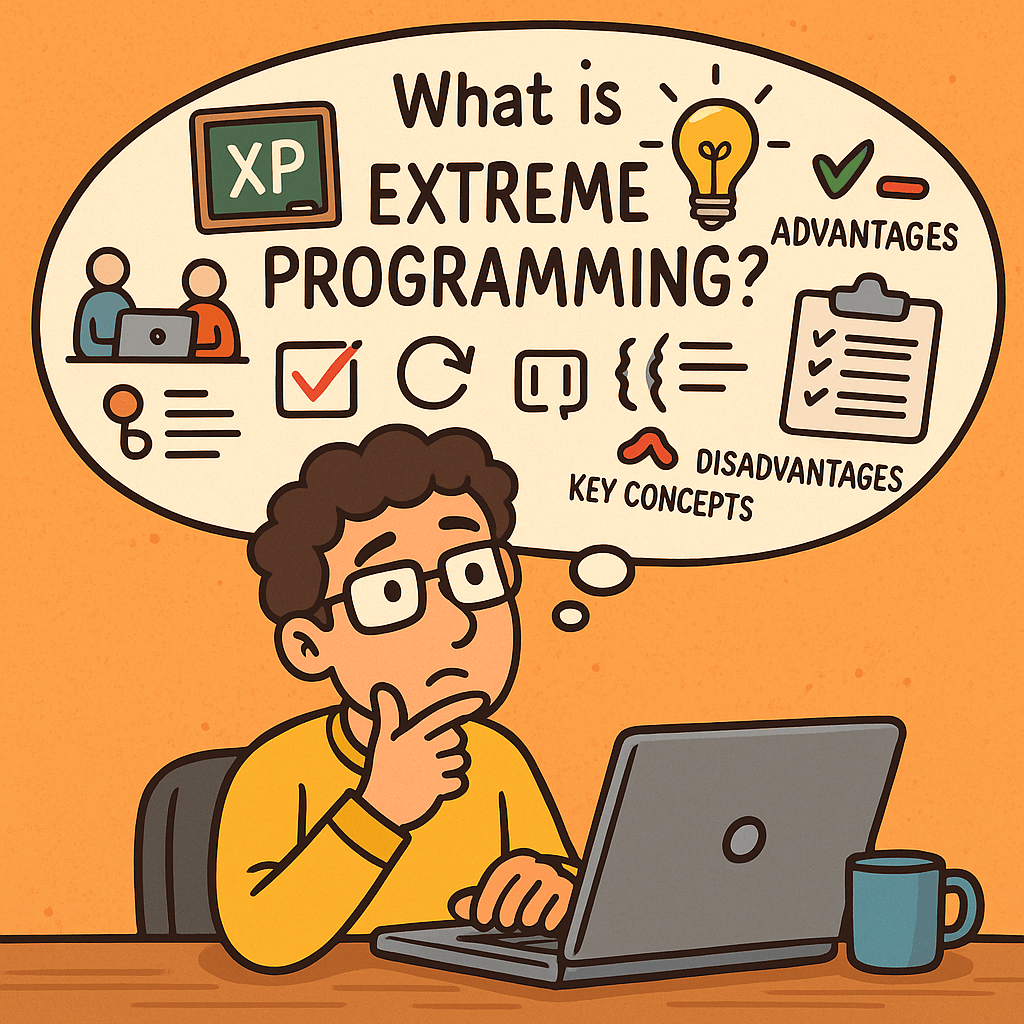
Extreme Programming (XP) is an agile software development methodology that emphasizes customer satisfaction, flexibility, and high-quality code. It focuses on short development cycles, frequent releases, constant communication with stakeholders, and continuous improvement. The name “extreme” comes from the idea of taking best practices in software development to an extreme level—such as testing, code reviews, and communication.

A Brief History of Extreme Programming

Extreme Programming was introduced in the late 1990s by Kent Beck while he was working on the Chrysler Comprehensive Compensation System (C3 project). Beck published the book Extreme Programming Explained in 1999, which formalized the methodology.
XP emerged at a time when traditional software development methods (like the Waterfall model) struggled with rapid change, unclear requirements, and long delivery cycles. XP provided an alternative: a flexible, customer-driven approach aligned with the Agile Manifesto (2001).

Key Concepts of Extreme Programming

XP is built around several fundamental concepts:

  • Communication – Constant interaction between developers, customers, and stakeholders.
  • Simplicity – Keep designs and code as simple as possible, avoiding over-engineering.
  • Feedback – Continuous feedback from customers and automated tests.
  • Courage – Developers should not fear changing code, improving design, or discarding work.
  • Respect – Teams value each other’s work and contributions.

Core Practices of Extreme Programming

XP emphasizes a set of engineering practices that make the methodology unique. Below are its key practices with explanations:

1. Pair Programming

Two developers work together at one workstation. One writes code (the driver) while the other reviews in real-time (the observer). This increases code quality and knowledge sharing.

2. Test-Driven Development (TDD)

Developers write automated tests before writing the actual code. This ensures the system works as intended and reduces defects.

3. Continuous Integration

Developers integrate code into the shared repository several times a day. Automated tests run on each integration to detect issues early.

4. Small Releases

Software is released in short cycles (e.g., weekly or bi-weekly), delivering incremental value to customers.

5. Refactoring

Developers continuously improve the structure of code without changing its functionality. This keeps the codebase clean and maintainable.

6. Coding Standards

The whole team follows the same coding guidelines to maintain consistency.

7. Collective Code Ownership

No piece of code belongs to one developer. Everyone can change any part of the code, which increases collaboration and reduces bottlenecks.

8. Simple Design

Developers design only what is necessary for the current requirements, avoiding unnecessary complexity.

9. On-Site Customer

A real customer representative is available to the team daily to provide feedback and clarify requirements.

10. Sustainable Pace (40-hour work week)

Developers should avoid burnout. XP discourages overtime to maintain productivity and quality over the long term.

Advantages of Extreme Programming

  • High customer satisfaction due to continuous involvement.
  • Improved software quality from TDD, pair programming, and continuous integration.
  • Flexibility to adapt to changing requirements.
  • Better teamwork and communication.
  • Frequent releases ensure value is delivered early.

Disadvantages of Extreme Programming

  • Requires strong discipline from developers to follow practices consistently.
  • High customer involvement may be difficult to maintain.
  • Pair programming can feel costly and inefficient if not done correctly.
  • Not suitable for very large teams without adjustments.
  • May seem chaotic to organizations used to rigid structures.

Do We Need Extreme Programming in Software Development?

The answer depends on your team size, project type, and customer needs.

  • XP is highly effective in projects with uncertain requirements, where customer collaboration is possible.
  • It is valuable when quality and speed are equally important, such as in startups or rapidly evolving industries.
  • However, if your team is large, distributed, or your customers cannot commit to daily involvement, XP may not be the best fit.

In conclusion, XP is not a one-size-fits-all solution, but when applied correctly, it can significantly improve both product quality and team morale.

Blog at WordPress.com.

Up ↑