
When learning data structures, arrays are usually the first stop. But once you’ve mastered them, you’ll quickly discover a new structure that solves many of their limitations: the linked list.
In this blog, we’ll explore what a linked list is, why we need it, when to use it, provide a real-world example, and analyze the time and memory complexities of linked lists.
What is a Linked List?
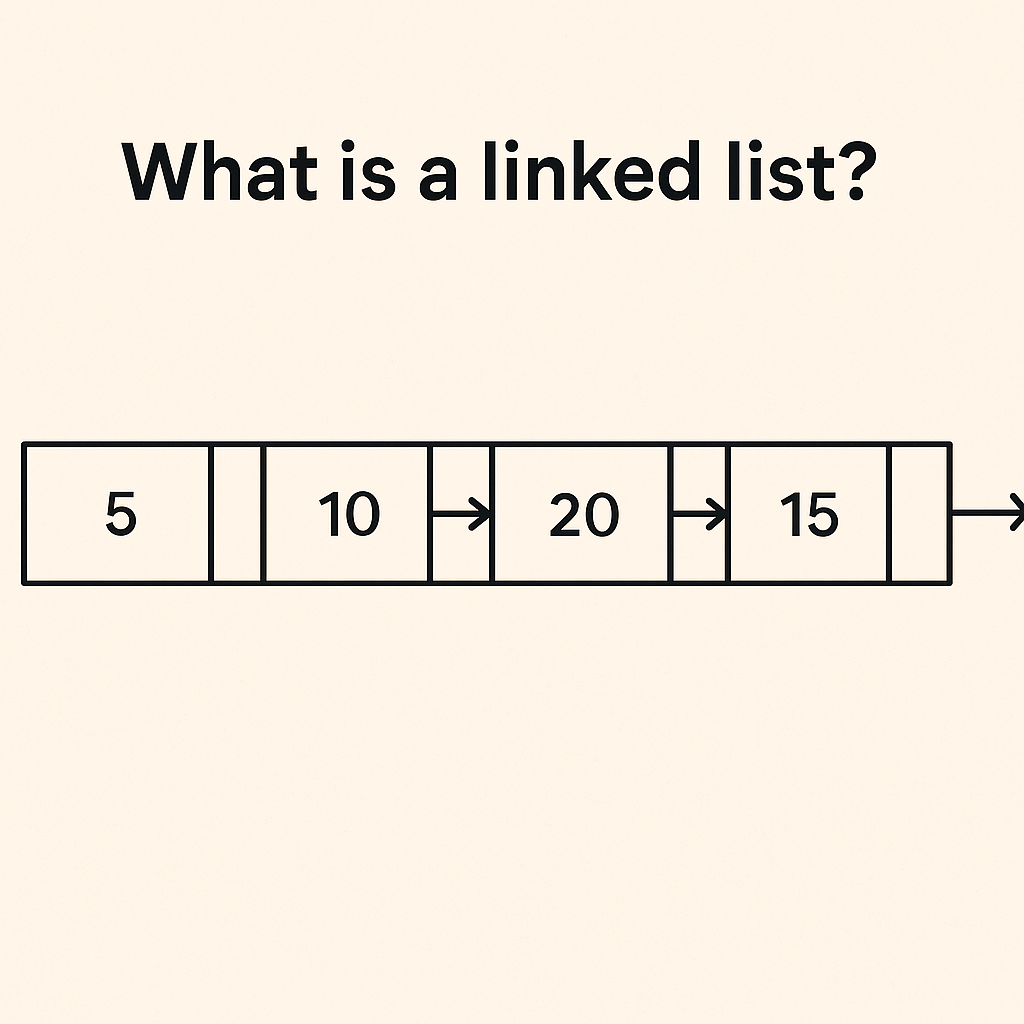
A linked list is a linear data structure where elements (called nodes) are stored in separate memory locations and connected using pointers (links).
Each node typically contains:
- Data – the value you want to store
- Pointer/Reference – an address pointing to the next node in the list
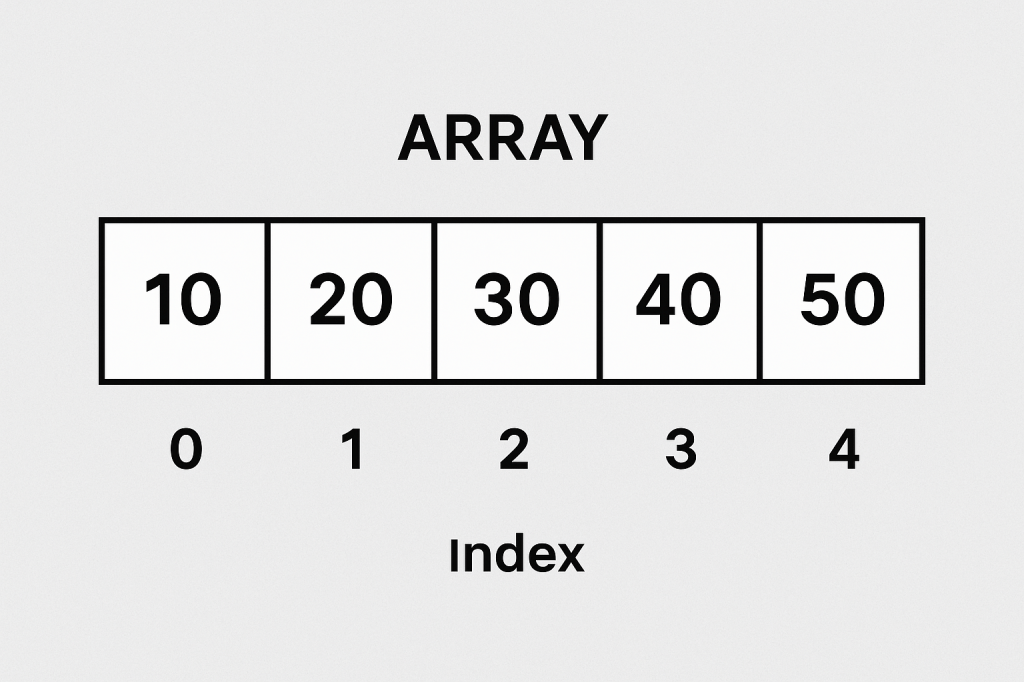
Unlike arrays, linked lists do not store elements in contiguous memory blocks.
Why Do We Need Linked Lists?
Arrays are simple and efficient for random access, but they come with drawbacks:
- Fixed size (in most programming languages, arrays cannot grow dynamically without creating a new one)
- Costly insertions and deletions (shifting elements takes time)
Linked lists solve these issues by:
- Allowing dynamic memory allocation (they grow and shrink as needed)
- Enabling fast insertions and deletions without shifting entire elements
When Should We Use Linked Lists?
You should consider linked lists when:
- Memory is fragmented, and you can’t allocate a large contiguous block (required for arrays).
- You expect frequent insertions and deletions, especially in the middle of the collection.
- Random access is not a priority (linked lists are slower at accessing an element by index).
Real-World Example
Imagine a music playlist app.
- Songs can be dynamically added or removed from the playlist.
- You don’t know the total number of songs in advance.
- You often skip to the next song (which is just following the pointer to the next node).
Here, a linked list structure is perfect because it supports efficient insertions, deletions, and sequential traversal.
Time & Memory Complexities
Here’s a quick overview of linked list operations:
| Operation | Time Complexity | Explanation |
|---|---|---|
| Populate (building a linked list of n elements) | O(n) | Each element needs to be inserted one by one |
| Insertion at head | O(1) | Just update the head pointer |
| Insertion at tail | O(1) (if tail pointer is maintained) / O(n) (if not) | Depends on whether you track the tail |
| Insertion in middle | O(n) | Need to traverse to the correct position |
| Deletion at head | O(1) | Update head pointer |
| Deletion at tail | O(n) | Need to traverse to the last element |
| Deletion in middle | O(n) | Traverse to find node, then remove |
| Access by index | O(n) | Must traverse sequentially |
| Memory usage | Higher than arrays | Each node requires extra space for a pointer |
Conclusion
Linked lists are powerful when dealing with dynamic data where frequent insertions and deletions occur. However, they trade off speed for random access and consume more memory due to pointers.
Understanding when to use arrays and when to use linked lists is a core skill every software engineer should master.

 Software Engineer's Notes
Recent Comments