
Search

Software Engineer's Notes

Tag

cryptography

Forward Secrecy in Computer Science: A Detailed Guide

What is forward secrecy?

What is Forward Secrecy?

Forward Secrecy (also called Perfect Forward Secrecy or PFS) is a cryptographic property that ensures the confidentiality of past communications even if the long-term private keys of a server are compromised in the future.

In simpler terms: if someone records your encrypted traffic today and later manages to steal the server’s private key, forward secrecy prevents them from decrypting those past messages.

This makes forward secrecy a powerful safeguard in modern security protocols, especially in an age where data is constantly being transmitted and stored.

A Brief History of Forward Secrecy

The concept of forward secrecy grew out of concerns around key compromise and long-term encryption risks:

  • 1976 – Diffie–Hellman key exchange introduced: Whitfield Diffie and Martin Hellman presented a method for two parties to establish a shared secret over an insecure channel. This idea laid the foundation for forward secrecy.
  • 1980s–1990s – Early SSL/TLS protocols: Early versions of SSL/TLS encryption primarily relied on static RSA keys. While secure at the time, they did not provide forward secrecy—meaning if a private RSA key was stolen, past encrypted sessions could be decrypted.
  • 2000s – TLS with Ephemeral Diffie–Hellman (DHE/ECDHE): Forward secrecy became more common with the adoption of ephemeral Diffie–Hellman key exchanges, where temporary session keys were generated for each communication.
  • 2010s – Industry adoption: Companies like Google, Facebook, and WhatsApp began enforcing forward secrecy in their security protocols to protect users against large-scale data breaches and surveillance.
  • Today: Forward secrecy is considered a best practice in modern cryptographic systems and is a default in most secure implementations of TLS 1.3.

How Does Forward Secrecy Work?

Forward secrecy relies on ephemeral key exchanges—temporary keys that exist only for the duration of a single session.

The process typically works like this:

  1. Key Agreement: Two parties (e.g., client and server) use a protocol like Diffie–Hellman Ephemeral (DHE) or Elliptic-Curve Diffie–Hellman Ephemeral (ECDHE) to generate a temporary session key.
  2. Ephemeral Nature: Once the session ends, the key is discarded and never stored permanently.
  3. Data Encryption: All messages exchanged during the session are encrypted with this temporary key.
  4. Protection: Even if the server’s private key is later compromised, attackers cannot use it to decrypt old traffic because the session keys were unique and have been destroyed.

This contrasts with static key exchanges, where a single private key could unlock all past communications if stolen.

Benefits of Forward Secrecy

Forward secrecy offers several key advantages:

  • Protection Against Key Compromise: If an attacker steals your long-term private key, they still cannot decrypt past sessions.
  • Data Privacy Over Time: Even if adversaries record encrypted traffic today, it will remain safe in the future.
  • Resilience Against Mass Surveillance: Prevents large-scale attackers from retroactively decrypting vast amounts of data.
  • Improved Security Practices: Encourages modern cryptographic standards such as TLS 1.3.

Example:

Imagine an attacker records years of encrypted messages between a bank and its customers. Later, they manage to steal the bank’s private TLS key.

  • Without forward secrecy: all those years of recorded traffic could be decrypted.
  • With forward secrecy: the attacker gains nothing—each past session had its own temporary key that is now gone.

Weaknesses and Limitations of Forward Secrecy

While forward secrecy is powerful, it is not without challenges:

  • Performance Overhead: Generating ephemeral keys requires more CPU resources, though this has become less of an issue with modern hardware.
  • Complex Implementations: Incorrectly implemented ephemeral key exchange protocols may introduce vulnerabilities.
  • Compatibility Issues: Older clients, servers, or protocols may not support DHE/ECDHE, leading to fallback on weaker, non-forward-secret modes.
  • No Protection for Current Sessions: If a session key is stolen during an active session, forward secrecy cannot help—it only protects past sessions.

Why and How Should We Use Forward Secrecy?

Forward secrecy is a must-use in today’s security landscape because:

  • Data breaches are inevitable, but forward secrecy reduces their damage.
  • Cloud services, messaging platforms, and financial institutions handle sensitive data daily.
  • Regulations and industry standards increasingly recommend or mandate forward secrecy.

Real-World Examples:

  • Google and Facebook: Enforce forward secrecy across their HTTPS connections to protect user data.
  • WhatsApp and Signal: Use end-to-end encryption with forward secrecy, ensuring messages cannot be decrypted even if long-term keys are compromised.
  • TLS 1.3 (2018): The newest version of TLS requires forward secrecy by default, pushing the industry toward safer encryption practices.

Integrating Forward Secrecy into Software Development

Here’s how you can adopt forward secrecy in your own development process:

  1. Use Modern Protocols: Prefer TLS 1.3 or TLS 1.2 with ECDHE key exchange.
  2. Update Cipher Suites: Configure servers to prioritize forward-secret cipher suites (e.g., ECDHE_RSA_WITH_AES_256_GCM_SHA384).
  3. Secure Messaging Systems: Implement end-to-end encryption protocols that leverage ephemeral keys.
  4. Code Reviews & Testing: Ensure forward secrecy is included in security testing and DevSecOps pipelines.
  5. Stay Updated: Regularly patch and upgrade libraries like OpenSSL, BoringSSL, or GnuTLS to ensure forward secrecy support.

Conclusion

Forward secrecy is no longer optional—it is a critical defense mechanism in modern cryptography. By ensuring that past communications remain private even after a key compromise, forward secrecy offers long-term protection in an increasingly hostile cyber landscape.

Integrating forward secrecy into your software development process not only enhances security but also builds user trust. With TLS 1.3, messaging protocols, and modern encryption libraries, adopting forward secrecy is easier than ever.
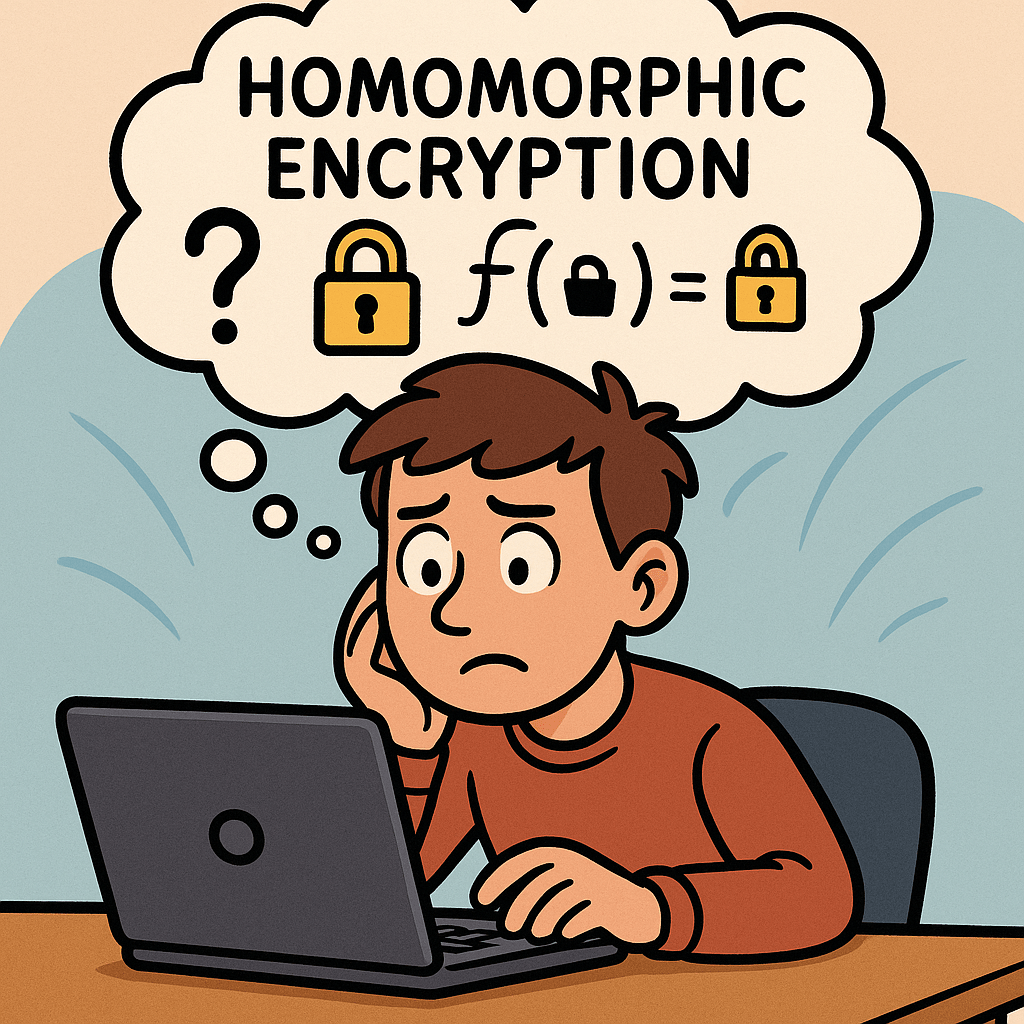

Homomorphic Encryption: A Comprehensive Guide

What is Homomorphic Encryption?

What is Homomorphic Encryption?

Homomorphic Encryption (HE) is an advanced form of encryption that allows computations to be performed on encrypted data without ever decrypting it. The result of the computation, once decrypted, matches the output as if the operations were performed on the raw, unencrypted data.

In simpler terms: you can run mathematical operations on encrypted information while keeping it private and secure. This makes it a powerful tool for data security, especially in environments where sensitive information needs to be processed by third parties.

A Brief History of Homomorphic Encryption

  • 1978 – Rivest, Adleman, Dertouzos (RAD paper): The concept was first introduced in their work on “Privacy Homomorphisms,” which explored how encryption schemes could support computations on ciphertexts.
  • 1982–2000s – Partial Homomorphism: Several encryption schemes were developed that supported only one type of operation (either addition or multiplication). Examples include RSA (multiplicative homomorphism) and Paillier (additive homomorphism).
  • 2009 – Breakthrough: Craig Gentry proposed the first Fully Homomorphic Encryption (FHE) scheme as part of his PhD thesis. This was a landmark moment, proving that it was mathematically possible to support arbitrary computations on encrypted data.
  • 2010s–Present – Improvements: Since Gentry’s breakthrough, researchers and companies (e.g., IBM, Microsoft, Google) have been working on making FHE more practical by improving performance and reducing computational overhead.

How Does Homomorphic Encryption Work?

At a high level, HE schemes use mathematical structures (like lattices, polynomials, or number theory concepts) to allow algebraic operations directly on ciphertexts.

  1. Encryption: Plaintext data is encrypted using a special homomorphic encryption scheme.
  2. Computation on Encrypted Data: Mathematical operations (addition, multiplication, etc.) are performed directly on the ciphertext.
  3. Decryption: The encrypted result is decrypted, yielding the same result as if the operations were performed on plaintext.

For example:

  • Suppose you encrypt numbers 4 and 5.
  • The server adds the encrypted values without knowing the actual numbers.
  • When you decrypt the result, you get 9.

This ensures that sensitive data remains secure during computation.

Variations of Homomorphic Encryption

There are different types of HE based on the level of operations supported:

  1. Partially Homomorphic Encryption (PHE): Supports only one operation (e.g., RSA supports multiplication, Paillier supports addition).
  2. Somewhat Homomorphic Encryption (SHE): Supports both addition and multiplication, but only for a limited number of operations before noise makes the ciphertext unusable.
  3. Fully Homomorphic Encryption (FHE): Supports unlimited operations of both addition and multiplication. This is the “holy grail” of HE but is computationally expensive.

Benefits of Homomorphic Encryption

  • Privacy Preservation: Data remains encrypted even during processing.
  • Enhanced Security: Third parties (e.g., cloud providers) can compute on data without accessing the raw information.
  • Regulatory Compliance: Helps organizations comply with privacy laws (HIPAA, GDPR) by securing sensitive data such as health or financial records.
  • Collaboration: Enables secure multi-party computation where organizations can jointly analyze data without exposing raw datasets.

Why and How Should We Use It?

We should use HE in cases where data confidentiality and secure computation are equally important. Traditional encryption secures data at rest and in transit, but HE secures data while in use.

Implementation steps include:

  1. Choosing a suitable library or framework (e.g., Microsoft SEAL, IBM HELib, PALISADE).
  2. Identifying use cases where sensitive computations are required (e.g., health analytics, secure financial transactions).
  3. Integrating HE into existing software through APIs or SDKs provided by these libraries.

Real World Examples of Homomorphic Encryption

  • Healthcare: Hospitals can encrypt patient data and send it to cloud servers for analysis (like predicting disease risks) without exposing sensitive medical records.
  • Finance: Banks can run fraud detection models on encrypted transaction data, ensuring privacy of customer information.
  • Machine Learning: Encrypted datasets can be used to train machine learning models securely, protecting training data from leaks.
  • Government & Defense: Classified information can be processed securely by contractors without disclosing the underlying sensitive details.

Integrating Homomorphic Encryption into Software Development

  1. Assess the Need: Determine if your application processes sensitive data that requires computation by third parties.
  2. Select an HE Library: Popular libraries include SEAL (Microsoft), HELib (IBM), and PALISADE (open-source).
  3. Design for Performance: HE is still computationally heavy; plan your architecture with efficient algorithms and selective encryption.
  4. Testing & Validation: Run test scenarios to validate that encrypted computations produce correct results.
  5. Deployment: Deploy as part of your microservices or cloud architecture, ensuring encrypted workflows where required.

Conclusion

Homomorphic Encryption is a game-changer in modern cryptography. While still in its early stages of practical adoption due to performance challenges, it provides a new paradigm of data security: protecting information not only at rest and in transit, but also during computation.

As the technology matures, more industries will adopt it to balance data utility with data privacy—a crucial requirement in today’s digital landscape.

Cryptographically Secure Pseudo-Random Number Generator (CSPRNG)

What is Cryptographically Secure Pseudo-Random Number Generator?

In modern computing, randomness plays a vital role in security, encryption, authentication, and even everyday applications. But not all randomness is created equal. When dealing with sensitive data, we need something much stronger than just “random”—we need cryptographically secure pseudo-random number generators (CSPRNGs). In this blog, we’ll explore what they are, their history, how they work, and why they’re so important in software development.

What is a Cryptographically Secure Pseudo-Random Number Generator?

A CSPRNG is a type of algorithm that generates numbers that appear random but are actually produced by a deterministic process. Unlike regular pseudo-random number generators (PRNGs), which may be predictable with enough knowledge of their internal state, CSPRNGs are specifically designed to withstand cryptographic attacks.

In other words, even if an attacker observes many outputs from a CSPRNG, they should not be able to determine the next output or deduce the internal state.

A Brief History of CSPRNGs

The history of random number generation in cryptography dates back to the early days of secure communications:

  • 1940s – WWII era: Randomness was used in encryption systems like the one-time pad, which relied on truly random keys. However, generating and distributing such randomness securely was impractical.
  • 1960s–1970s: As computers evolved, researchers began designing algorithms to simulate randomness. Early pseudo-random generators (like Linear Congruential Generators) were fast but not secure for cryptographic use.
  • 1980s–1990s: With the rise of public-key cryptography (RSA, Diffie-Hellman), stronger random number generation became critical. This led to the development of algorithms like Blum Blum Shub (1986) and Yarrow (1999).
  • 2000s–Today: Modern operating systems now include secure random number sources, such as /dev/random and /dev/urandom in Unix-like systems, and CryptGenRandom or CNG in Windows. Algorithms like Fortuna and HMAC_DRBG are widely used in cryptographic libraries.

Features and Characteristics of CSPRNGs

CSPRNGs are different from regular PRNGs because they meet strict cryptographic requirements. Key features include:

  1. Unpredictability: Given past outputs, the next output cannot be guessed.
  2. Resistance to State Compromise: Even if some internal state is leaked, it should not compromise past or future outputs.
  3. High Entropy Source: They often draw from unpredictable system events (e.g., mouse movements, keystrokes, network interrupts).
  4. Deterministic Expansion: Once seeded with secure entropy, they can generate large amounts of secure random data.
  5. Standards Compliance: Many are defined by standards like NIST SP 800-90A.

How Does a CSPRNG Work?

At its core, a CSPRNG works in two stages:

  1. Seeding (Entropy Collection):
    The system gathers entropy from unpredictable sources like hardware noise, CPU timings, or environmental factors.
  2. Expansion (Pseudo-Random Generation):
    The seed is processed through a secure algorithm (such as AES in counter mode, SHA-256 hashing, or HMAC). This allows the generator to produce a long stream of secure pseudo-random numbers.

For example:

  • A hash-based CSPRNG applies a secure hash function to seed data repeatedly.
  • A block cipher-based CSPRNG encrypts counters with a secret seed to produce outputs.

Both approaches ensure that the output is indistinguishable from true randomness.

Why is it Important?

CSPRNGs are the backbone of modern security. Without them, encryption and authentication systems would be predictable and vulnerable. Their importance spans across:

  • Key Generation: Secure keys for symmetric and asymmetric cryptography.
  • Session Tokens: Secure identifiers for logins and sessions.
  • Nonces and IVs: Ensuring uniqueness in encryption schemes.
  • Password Salt Generation: Preventing rainbow table attacks.

Without cryptographic security in random numbers, attackers could exploit weaknesses and compromise entire systems.

Advantages and Benefits

  1. Security Assurance: Provides unpredictable randomness that resists cryptanalysis.
  2. Scalability: Can produce large amounts of random data from a small seed.
  3. Versatility: Used in encryption, authentication, simulations, and secure protocols.
  4. Backward and Forward Secrecy: Protects both past and future outputs even if part of the state is exposed.
  5. Standardization: Recognized and trusted across industries.

When and How Should We Use It?

You should use CSPRNGs whenever randomness has a security impact:

  • Generating cryptographic keys (RSA, AES, ECC).
  • Creating session identifiers or API tokens.
  • Producing salts and nonces for password hashing and encryption.
  • In secure protocols (TLS, SSH, IPsec).

For non-security tasks (like shuffling items in a game), a regular PRNG may suffice. But for anything involving sensitive data, always use a CSPRNG.

Integrating CSPRNGs into Software Development

Most modern languages and frameworks provide built-in CSPRNG libraries. Integration usually involves using the recommended secure API instead of regular random functions. Examples:

  • Java: SecureRandom class.
  • Python: secrets module or os.urandom().
  • C/C++: getrandom(), /dev/urandom, or libraries like OpenSSL.
  • JavaScript (Web): window.crypto.getRandomValues().
  • .NET: RNGCryptoServiceProvider or RandomNumberGenerator.

Best Practices for Integration:

  • Always use language-provided CSPRNG libraries (don’t roll your own).
  • Ensure proper seeding with entropy from the OS.
  • Use latest libraries that comply with security standards.
  • Apply code reviews and security audits to confirm correct usage.

Conclusion

Cryptographically Secure Pseudo-Random Number Generators are one of the unsung heroes of modern computing. They ensure that our communications, logins, and transactions remain safe from attackers. By understanding their history, characteristics, and applications, we can better integrate them into our software development processes and build secure systems.

Whenever security is at stake, always rely on a CSPRNG—because in cryptography, true randomness matters.

Blog at WordPress.com.

Up ↑