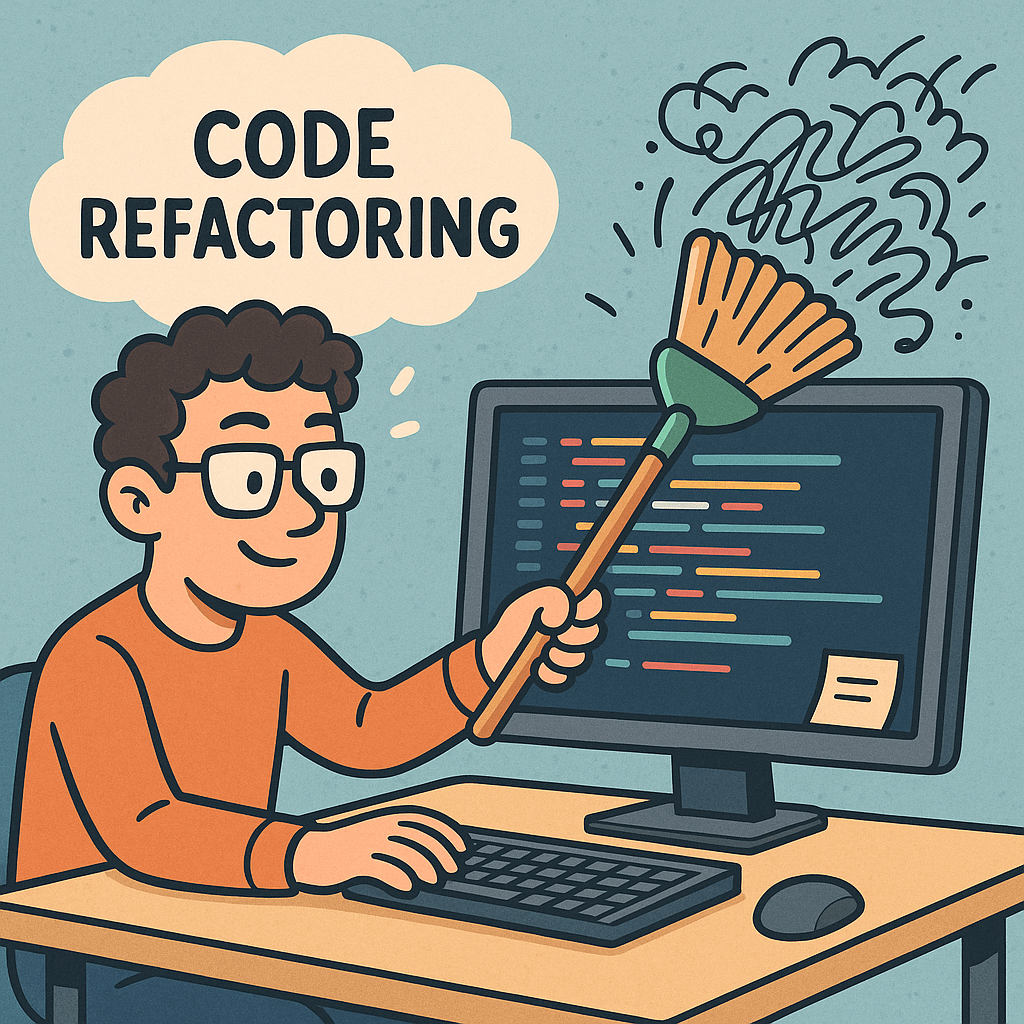
What is Code Refactoring?
Code refactoring is the process of restructuring existing computer code without changing its external behavior. The main purpose is to improve the internal structure of the code—making it cleaner, easier to read, and more maintainable—without introducing new features or fixing bugs.
In simple terms, think of it as “tidying up” your code to make it better organized and easier to work with.
Why Do We Need Code Refactoring?
Over time, software projects grow and evolve. As new features are added quickly, the codebase may become cluttered, repetitive, or difficult to maintain. Refactoring helps:
- Reduce technical debt.
- Improve code readability for current and future developers.
- Enhance maintainability and reduce the risk of bugs.
- Support scalability as the project grows.
- Improve performance in some cases.
Main Concepts of Code Refactoring
When refactoring, developers usually follow some guiding concepts:
- Clean Code – Code should be easy to read, simple, and expressive.
- DRY (Don’t Repeat Yourself) – Remove code duplication.
- KISS (Keep It Simple, Stupid) – Avoid overcomplicated solutions.
- Single Responsibility Principle (SRP) – Each class, method, or function should do one thing well.
- YAGNI (You Aren’t Gonna Need It) – Avoid adding unnecessary functionality before it’s required.
Best Practices for Code Refactoring
To refactor successfully, follow these best practices:
- Write tests before refactoring: Ensure that the code’s behavior remains the same after changes.
- Small steps, frequent commits: Don’t attempt massive refactoring in one go; take incremental steps.
- Automated tools: Use IDE features like “extract method,” “rename,” or linters to catch issues.
- Code reviews: Have peers review refactored code for better quality.
- Refactor regularly: Make it part of your development cycle instead of waiting until the code becomes unmanageable.
How Should We Use Refactoring in Our Projects?
- Integrate refactoring into Agile sprints while working on new features.
- Refactor during bug fixing when messy code makes issues hard to track.
- Apply the “Boy Scout Rule”: Always leave the code cleaner than you found it.
- Use CI/CD pipelines to run tests automatically after refactoring.
Benefits of Code Refactoring
- Improved readability → Easier onboarding of new team members.
- Reduced complexity → Simplified logic and structure.
- Lower maintenance cost → Fewer bugs and easier updates.
- Increased reusability → Cleaner components can be reused in other parts of the project.
- Higher development speed → Developers spend less time understanding messy code.
Issues and Challenges of Code Refactoring
Despite its benefits, refactoring can pose challenges:
- Risk of introducing bugs if tests are not comprehensive.
- Time constraints in fast-paced projects may limit refactoring opportunities.
- Lack of tests in legacy systems makes safe refactoring difficult.
- Resistance from stakeholders who prefer adding new features over code improvements.
Conclusion
Code refactoring is not just a technical activity—it’s an investment in the long-term health of your software project. By applying it consistently with best practices, you ensure that your codebase remains clean, efficient, and adaptable for future growth.
Remember: Refactoring is not a one-time effort but a continuous process that should become part of your development culture.

 Software Engineer's Notes
Recent Comments