Search

Software Engineer's Notes

Tag

business

Minimum Viable Product (MVP) in Software Development

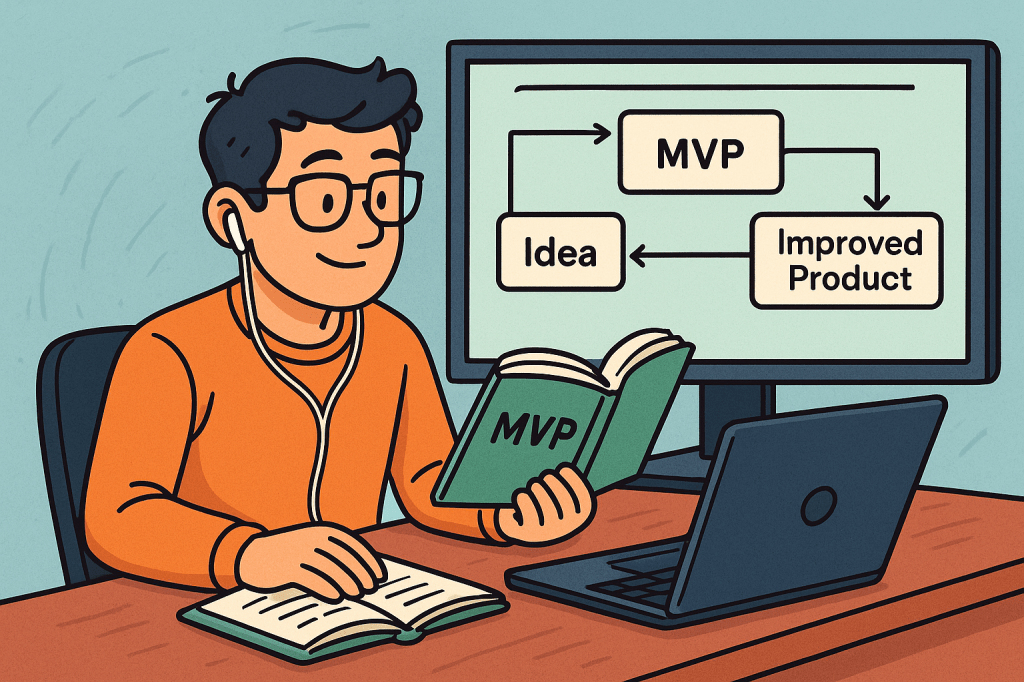
Learning minimum viable product

When developing a new product, one of the most effective strategies is to start small, test your ideas, and grow based on real feedback. This approach is called creating a Minimum Viable Product (MVP).

What is a Minimum Viable Product?

A Minimum Viable Product (MVP) is the most basic version of a product that still delivers value to users. It is not a full-fledged product with every feature imagined, but a simplified version that solves the core problem and allows you to test your concept in the real world.

The MVP focuses on answering one important question: Does this product solve a real problem for users?

Key Features of an MVP

  1. Core Functionality Only
    An MVP should focus on the most essential features that directly address the problem. Extra features can be added later once feedback is collected.
  2. Usability
    Even though it is minimal, the product must be usable. Users should be able to complete the core task smoothly without confusion.
  3. Scalability Consideration
    While it starts small, the design should not block future growth. The MVP should be a foundation for future improvements.
  4. Fast to Build
    The MVP must be developed quickly so that testing and feedback cycles can begin early. Speed is one of its key strengths.
  5. Feedback-Driven
    The MVP should make it easy to collect feedback from users, whether through analytics, surveys, or usage data.

Purpose of an MVP

The main purpose of an MVP is validation. Before investing large amounts of time and resources, companies want to know if their idea will actually succeed.

  • It allows testing assumptions with real users.
  • It helps confirm whether the problem you are solving is truly important.
  • It prevents wasting resources on features or ideas that don’t matter to customers.
  • It provides early market entry and brand visibility.

In short, the purpose of an MVP is to reduce risk while maximizing learning.

Benefits of an MVP

  1. Cost Efficiency
    Instead of spending a large budget on full development, an MVP helps you invest small and learn quickly.
  2. Faster Time to Market
    You can launch quickly, test your idea, and make improvements while competitors are still planning.
  3. Real User Feedback
    MVP development lets you learn directly from your audience instead of guessing what they want.
  4. Reduced Risk
    By validating assumptions early, you avoid investing in products that may not succeed.
  5. Investor Confidence
    If your MVP shows traction, it becomes easier to attract investors and funding.

Real-World Example of an MVP

One famous example is Dropbox. Before building the full product, Dropbox created a simple video demonstrating how their file-sharing system would work. The video attracted thousands of sign-ups from people who wanted the product, proving the idea had strong demand. Based on this validation, Dropbox built and released the full product, which later became a global success.

How to Use an MVP in Software Development

  1. Identify the Core Problem
    Focus on the exact problem your software aims to solve.
  2. Select Key Features Only
    Build only the features necessary to address the core problem.
  3. Develop Quickly
    Keep development short and simple. The goal is learning, not perfection.
  4. Release to a Small Audience
    Test with early adopters who are willing to give feedback.
  5. Collect Feedback and Iterate
    Use customer feedback to improve the product step by step.
  6. Scale Gradually
    Once validated, add new features and expand your product.

By adopting the MVP approach, software teams can innovate faster, reduce risk, and build products that truly meet customer needs.

Understanding the Waterfall Model in Software Development

Learning waterfall model

What is the Waterfall Model?

What is the Waterfall Model?

The Waterfall Model is one of the earliest and most traditional approaches to software development. It follows a linear and sequential design process, where each phase must be completed before moving on to the next. Much like water flowing down a series of steps, the process moves forward without going back.

A Brief History of the Waterfall Model

The concept of the Waterfall Model was first introduced in 1970 by Dr. Winston W. Royce in his paper “Managing the Development of Large Software Systems”. While Royce actually presented it as an example of a flawed model (because of its rigidity), the structure was later adapted and formalized. Since then, it became widely used in the 1970s and 1980s, especially for large government and defense projects, where strict documentation and approvals were necessary.

Principles of the Waterfall Model

The Waterfall Model is based on a few guiding principles that define its step-by-step structure:

  1. Sequential Progression
    Development flows in one direction — from requirements to design, implementation, testing, deployment, and maintenance.
  2. Phase Dependency
    Each phase must be fully completed before moving to the next. No overlapping or revisiting of previous phases is expected.
  3. Documentation Driven
    Every stage produces detailed documentation, ensuring clarity and consistency throughout the project lifecycle.
  4. Predictability and Control
    With well-defined phases and deliverables, project timelines and costs can be estimated more accurately.
  5. Customer Sign-off at Each Stage
    Stakeholders approve requirements and designs at early stages, reducing the chances of late surprises.

Why Should We Use the Waterfall Model?

The Waterfall Model provides a clear structure and is easy to understand. It is especially useful for teams that need:

  • A predictable and straightforward process.
  • Detailed documentation and traceability.
  • Strict compliance with external regulations.

Advantages of the Waterfall Model

  • Simple and easy to manage.
  • Well-defined stages with clear milestones.
  • Detailed documentation helps with knowledge transfer.
  • Suitable for projects with stable and well-understood requirements.
  • Easier to measure progress against the plan.

Disadvantages of the Waterfall Model

  • Very rigid and inflexible.
  • Difficult to adapt to changing requirements.
  • Testing comes late in the process, which may delay bug detection.
  • Not ideal for projects with high uncertainty or evolving needs.
  • Can lead to wasted effort if requirements change after early stages.

When Should We Use the Waterfall Model?

The Waterfall Model is best suited for:

  • Projects with clear, fixed requirements that are unlikely to change.
  • Systems requiring strict compliance, such as healthcare, defense, or government projects.
  • Projects where documentation and approvals are critical.
  • Smaller projects where the scope is well understood from the start.

It is less suitable for agile environments or modern software systems that require rapid iterations and frequent feedback.

Applying the Waterfall Model in Software Development

To apply the Waterfall Model in your process:

  1. Gather Requirements – Collect all functional and non-functional requirements from stakeholders.
  2. Design the System – Create detailed system and software designs, including architecture and data models.
  3. Implement the Code – Develop the system according to the approved design.
  4. Test the System – Perform unit, integration, and system testing to verify functionality.
  5. Deploy the Product – Deliver the software to the end users.
  6. Maintain the System – Provide updates, bug fixes, and support over time.

By following these phases strictly in sequence, you can ensure a predictable outcome — though at the cost of flexibility.

Blog at WordPress.com.

Up ↑